Saturday, November 30, 2013

Thursday, November 28, 2013
Demystifying Contraception
Happy Thanksgiving Everyone! We are thankful for birth control!

http://twitchy.com/2013/11/28/check-out-25-people-who-are-thankful-for-birth-control-bonus-norman-rockwell-update/
Think you know the facts about contraception? Let's us DEBUNK your misconceptions about birth control. Learn the truth about common misconceptions.
Do you have any burning questions about staying safe in the sack? Send us things you've heard about birth control from your friends or family, and we will set you straight. The TRUTH will set you free!

http://www.perpetualkid.com/birth-control-gum.aspx
http://twitchy.com/2013/11/28/check-out-25-people-who-are-thankful-for-birth-control-bonus-norman-rockwell-update/
Think you know the facts about contraception? Let's us DEBUNK your misconceptions about birth control. Learn the truth about common misconceptions.
Do you have any burning questions about staying safe in the sack? Send us things you've heard about birth control from your friends or family, and we will set you straight. The TRUTH will set you free!
http://www.perpetualkid.com/birth-control-gum.aspx
Monday, November 25, 2013
Shooting into the stands – Pull Out and Pray
The
withdrawal method of contraception, also known as coitus interruptus, is the
practice of withdrawing the penis from the vagina and away from a woman's
external genitals before ejaculation to prevent pregnancy.


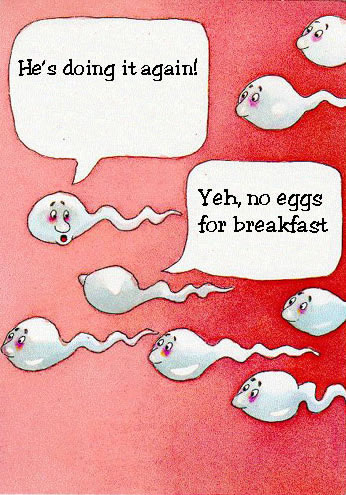
http://owaahh.wordpress.com/2012/09/30/philosophical-musings-on-the-withdrawal-method/
While it may
seem like a perfectly good alternative – make sure you know what you’re doing! Sperm may enter the vagina if withdrawal isn't properly timed or if pre-ejaculation fluid contains sperm. Men who use the
pull out method must be able to know when they are reaching the point in sexual
excitement when ejaculation can no longer be stopped or postponed. If you
cannot predict this moment accurately, withdrawal will not be as effective.
Why some do it?
-It’s Free.
-No
prescription, no fitting.
-No medical
or hormonal side effects.
-Enjoy
praying.
Why some shouldn’t?
-No
protection from STDs/STIs – HIV, gonorrhea, chlamydia, etc.
-Disrupts
sexual pleasure – can leave you sexually frustrated or dissatisfied
-Less
effective way to prevent pregnancy (As many as 22 out of 100 women who practice
the withdrawal method for one year will get pregnant.)
Studies have
found actual failure rates of 15–28% per year. In comparison, the pill has an
actual use failure rate of 2–8%, while the intrauterine
device (IUD) has an
actual use failure rate of 0.8%.The condom has an actual use failure rate of 10–18%.
Moral of the story? – Don’t be afraid to aim for
the net, but make sure you get a goalie!
Don’t listen
to all the rumors you hear, and find out for yourself. Modern methods can vary
from condoms, to IUDs, pills, injections, or subdermal implants. Schedule a visit with your OB/GYN physician
and discuss all your options to see what works best for you and your partner.
Sunday, November 24, 2013
True Life: I use a ParaGard IUD
Curious about this copper IUD? Listen to Christina as she shares her personal experience about the ParaGard IUD!

Just a quickie: ParaGard is an intrauterine device (IUD) that is placed into your uterus for long-term birth control (contraception).
This T-shaped plastic frame is wrapped with copper wire coils that continuously release copper to bathe the lining of the uterus.
It produces an inflammatory reaction that is toxic to sperm! If fertilization does occur, ParaGard keeps the fertilized egg from implanting in the lining of the uterus.
100% hormone free and doesn't alter your periods.
Just a quickie: ParaGard is an intrauterine device (IUD) that is placed into your uterus for long-term birth control (contraception).
This T-shaped plastic frame is wrapped with copper wire coils that continuously release copper to bathe the lining of the uterus.
It produces an inflammatory reaction that is toxic to sperm! If fertilization does occur, ParaGard keeps the fertilized egg from implanting in the lining of the uterus.
100% hormone free and doesn't alter your periods.
Thursday, November 21, 2013
NuvaRing -a reintroduction
 Taking the
Pill everyday becoming hard to swallow?
Taking the
Pill everyday becoming hard to swallow?
-A NuvaRing© that is.
Over
50 years since it was first introduced, the pill is the most popular method of
birth control in the US
Today's
post is dedicated to reintroducing the NuvaRing, another method of hormonal
birth control, which works in a way very similar to the pill.
First
released over 10 years ago, the NuvaRing offers the same effectiveness of the
pill but without the commitment of remembering to take it everyday around the
same time. It is a soft, flexible, small plastic ring filled with hormones that
you insert into your vagina once a month.
Yes
that's right, vaginal insertion. While it may sound "technical," ladies
who regularly use tampons should have no problems managing this with no extra
special skills required. In fact they sell applicators to keep things simple.

Like
the pill, the ring works by giving off two hormones to prevent the ovaries from
releasing eggs (a process called ovulation).
Also like the pill, the NuvaRing comes with similar risks. The pill and
the ring both carry increased risks of forming blood clots. Women who smoke are
at even more of a risk of getting these clots which can lead to stroke, heart
attack and potentially fatal condition called pulmonary embolism.
The
best candidate for the NuvaRing is a woman who is comfortable with the variety risks
and benefits of using hormonal methods of birth control. In fact a woman like
this might be pretty much happy with her pill but at the end of each pack always seems to wonder..
Did I miss any days? or Why do I have extra
pills left (in addition to the sugar pills)?
and ultimately: Could I be pregnant?
After
the NuvaRing is inserted its left in for three weeks, removed for one week
(where you should have your period) and then a new ring is inserted at the end
of the 4th week. A new ring every month, it can be as simple as that!
So
now that we've reintroduced the NuvaRing, lets recap:
Vaginal Insertion?
We mentioned the risks&benefits of using
the ring would be essentially the same as using the pill. Unlike with the pill,
the most common side effect with the NuvaRing is an increase in vaginal secretions
and vaginitis. Vaginitis is inflammation of the vaginal tissue that can cause
itching & pain. In a study of 2500 women(done by makers of the NuvaRing),
5-14% experienced side effects like this.
No Smoking Allowed
As with the pill, the hormones in NuvaRing increase the risk of forming
blood clots that can cause stroke, heart attacks or a pulmonary embolism.
Smoking cigarettes (e-cigs too) makes the blood even more likely to form these
clots. Don't forget ladies, its always a good time to quit smoking!
Expulsion! Its
possible for the NuvaRing to come out on its own, during sex or even in the
bathroom. If this happens, simply rinse and reinsert. In the first 2 weeks
after insertion, if the ring is left out of the vagina for more then 3 hours, a
backup barrier method (like condoms) should be used.
Always Protect
Yourself!
As with
any other non-barrier method (like the pill) the NuvaRing will not protect you
against STDs such as HIV.
Now
that you know the NuvaRing a little better, perhaps you will find it's right
for you or someone you know!
Post any comments or questions you have about this or
other methods of birth control here or on our other social media outlets. We
promise prompt responses so follow us at Speculumdiaries on Instagram and on facebook.
Subscribe to:
Posts (Atom)